Project logistics
Road, rail and sea, planned against one pad date.
A project move is only as fast as its slowest hand-off
A piece bound for a project crosses a vessel, a port, a customs line, a rail yard and a road before it reaches the pad.
Each leg has its own carrier, its own paperwork and its own idea of when the piece is ready. A delay at one hand-off runs down the chain, and the pad is the last to hear about it. On an island, a missed vessel is not a day lost but a sailing lost.
The moves the team is proudest of
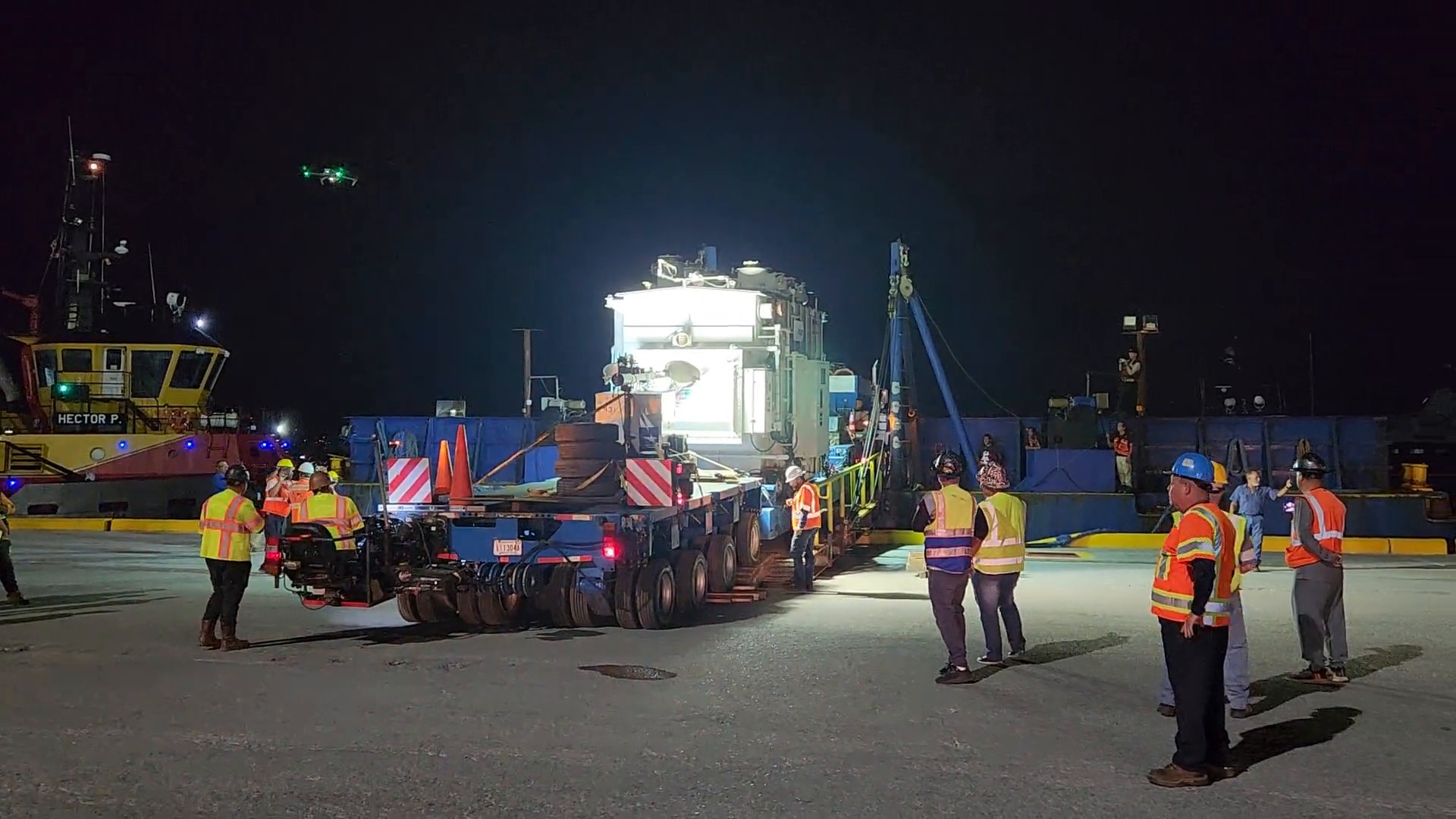
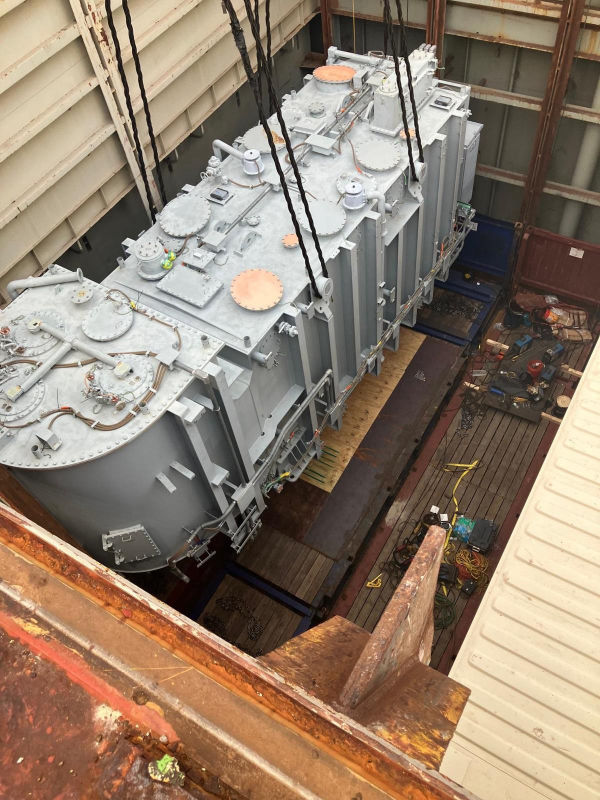
These are the moves with the most moving parts. A piece comes out of a factory, travels by rail to the coast, crosses in a ship's hold and reaches the pad by trailer.
Every joint in that chain is a place where a date can slip or a document can go missing. One coordinator owns all of them, so the road crew knows when the vessel lands before it lands, and you hear about a change once, from one person.
Ocean, rail, road and air
Ocean
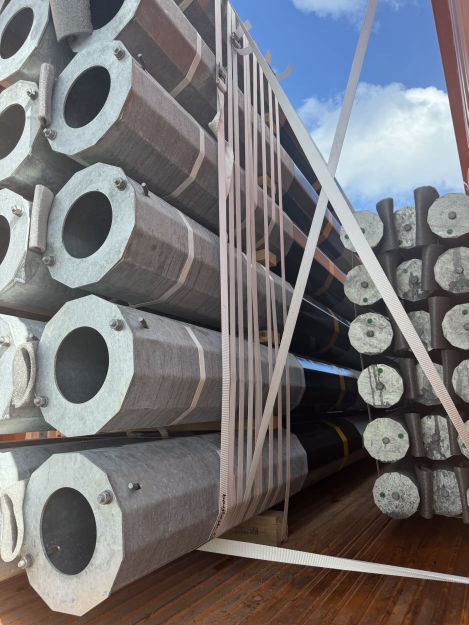
A breakbulk hold, a roll-on roll-off deck, a flat rack, an open top or a barge, chosen for the piece and for what the discharge port can lift.
Rail
For long inland legs where a string of road permits would cost more time than the rail yard does, joined to a truck at each end.
Road
The first leg out of the factory and the last into the site, permitted and escorted from the quay or the railhead to the gate.
Air
For the piece that cannot wait for a sailing. After Hurricane Maria, the team chartered an Antonov from Belarus to get product to the islands. It flew round trips nonstop for 14 days to Puerto Rico and the US Virgin Islands.
The customs file is built before the vessel sails
A piece held at the quay waiting on paperwork runs up storage and demurrage by the day, and the pad date goes with it. So the customs file is built while the piece is still at the factory: the commercial invoice, the packing list, the classification and any permit the destination requires.
We clear it through licensed customs brokers and stay with the file until the piece is released. You deal with us, not with each broker in each country.
Ports and islands keep their own clock
A port has its own cranes, its own yard, its own labor and its own hours. The discharge window, the yard space and the road permit all have to line up, and the stevedores and longshoremen decide when a piece actually moves. The team has worked the docks alongside them.
Where a port cannot take the ship that carried the piece, a barge and a tug bring it to a quay nearer the site. A self-propelled transporter drives it off. On an island the sailing sets the schedule, so when the pad date moves, the piece waits on the island instead of crossing back.
Local where it matters
Engineers hired in the country
Where a calculation is needed, we usually hire an engineer in the country the move crosses, and handle the rest in house.
English and Spanish
Spanish or English: our crews and coordinators work in either.
Where the team has worked
Africa, Asia, Puerto Rico and the United States, by aircraft, vessel, rail and truck.
A fast start
The freight plan often starts after the dates are fixed, and buyers now expect next-day speed. We respond quickly and get a team moving.
Have a move with this many legs? Tell us the origin, the destination and the pad date.
Vessels, customs and island ports
Are you a licensed customs broker?
No. We prepare the customs file and licensed customs brokers file it. You deal with us, and we deal with them.
What happens if the vessel is late or the site is not ready?
The piece waits at the port or in a yard, and we rebook the road leg and the escorts. Then we send you the revised date.
Can a piece fly instead of sail?
If the weight, the dimensions and the schedule justify it, yes. An air charter costs more than a sailing, and it can still cost less than an outage that slips.
Do you move cargo outside the United States?
Yes. Rocore takes international moves, and the plan covers every country the piece crosses, from the first permit to the last.
Is insurance part of the service?
Yes. Insurance is one of the things we handle around the move. Tell us what the piece needs covered when you ask for a quote.
Tell us where it ships from and when it must land
Send us the origin, the destination and the date the pad is ready, with whatever you know about the piece. We will build the legs from there.